
Invisalign vs. Traditional Braces: What Works Best for Busy Professionals & Teens
Finding time for orthodontic care can feel complicated, especially when work schedules, school activities, and social commitments are already full. Many patients who visit us at Community Dental are looking for solutions that straighten teeth without disrupting their routines. If you are considering orthodontic treatment in Columbus, OH, for yourself or your teen, understanding the differences between modern clear aligners and traditional braces can help you decide.
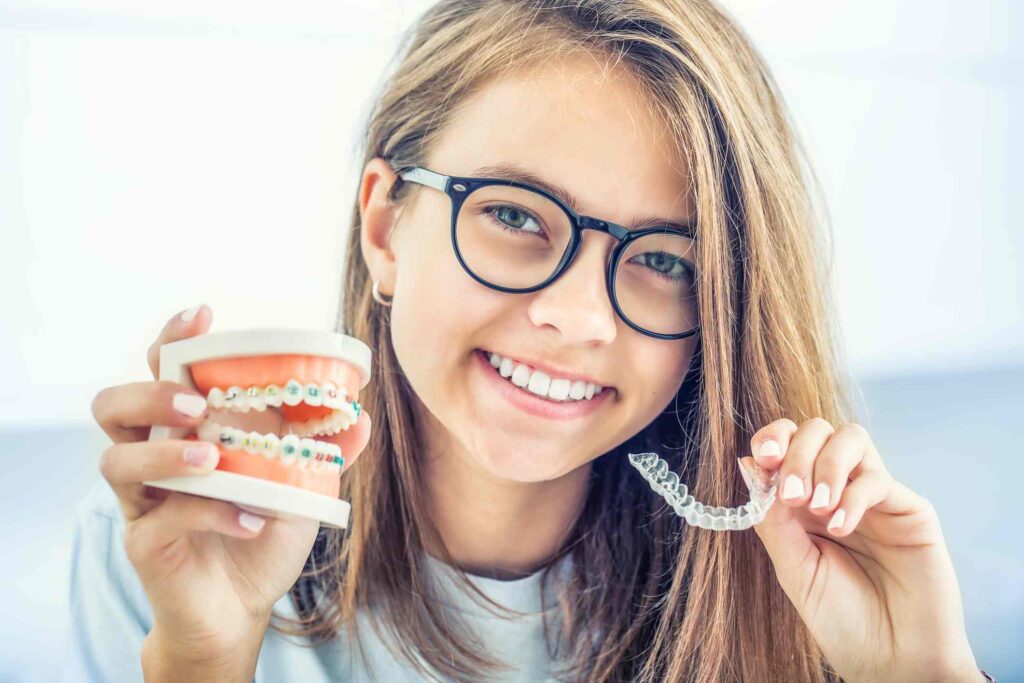
Choosing the Right Orthodontic Treatment for Your Lifestyle
Orthodontic care is no longer one-size-fits-all. The best orthodontic treatment depends on how well it fits into your daily habits, not just how it looks or how quickly it works. Busy professionals often want something discreet and flexible, while teens may need a solution that keeps treatment on track without relying too much on personal discipline.
There are also practical concerns to weigh, such as how often you can attend appointments, how comfortable you are with visible appliances, and how committed you can be to maintenance. Taking these factors into account narrows down whether Invisalign or braces make more sense.
Understanding the Basics – Invisalign and Traditional Braces
It’s important to understand how each option works. Invisalign uses a series of clear, removable aligners that gradually shift teeth into position. Each set is worn for a specific period before moving to the next, allowing for controlled movement over time. Traditional braces rely on brackets and wires attached to the teeth. These components are adjusted periodically to guide teeth into alignment. While metal braces are the most common, there are also less noticeable variations available. Both systems are effective, but they differ significantly in how they are worn, maintained, and experienced day to day.
Invisalign vs. Braces – Key Differences at a Glance
When comparing clear aligners vs metal braces, it helps to look at the features. Each option brings advantages that appeal to different types of patients. To make the Invisalign or braces comparison easier, here are a few key distinctions:
- Appearance is discreet with Invisalign and more visible with braces.
- Aligners are removable, while braces are fixed in place.
- Oral hygiene is simpler with Invisalign since you can brush and floss normally.
- Braces require dietary restrictions, while Invisalign allows more flexibility.
- Compliance is essential with Invisalign, while braces work continuously.
Why Invisalign Is Popular With Busy Professionals
For adults balancing work meetings, travel, and social obligations, Invisalign tends to stand out. The clear aligners are subtle, making them appealing for those who prefer a less noticeable treatment option. Many professionals appreciate being able to remove aligners during presentations, meals, or important events.
Another advantage is the reduced number of in-office visits. While check-ins are still necessary, they are typically less frequent than adjustments for braces. This can make a noticeable difference for those with tight schedules.
Because aligners are removable, there is also greater freedom when it comes to eating. There is no need to avoid certain foods, which can be especially helpful for those who dine out often or have unpredictable routines.
Why Traditional Braces May Be Better for Teens
While Invisalign vs braces for teens and adults can be a close comparison, traditional braces often work better for younger patients. One of the main reasons is consistency. Braces stay in place at all times, which means treatment continues regardless of habits or forgetfulness.
Teens may find it challenging to wear aligners for the recommended number of hours each day. Braces eliminate that concern, ensuring steady progress. They are also effective for more complex alignment issues, which are sometimes more common in younger patients.
Additionally, there is a certain level of customization that appeals to teens. Colored bands can make braces feel more personal and less clinical, which can improve the overall experience.
Comfort, Pain, and Adjustment Period
Both options come with an adjustment phase. Invisalign aligners apply gentle, consistent pressure, which many patients describe as manageable. There are no wires or brackets to irritate the inside of the mouth, which can make a difference in overall comfort. Braces, on the other hand, may cause occasional soreness after adjustments. The brackets and wires can also lead to minor irritation, especially early in treatment. Over time, most patients adapt and find the discomfort less noticeable. Pain tolerance varies from person to person, so what feels manageable for one individual may feel different for another. In either case, any discomfort is typically temporary and part of the process of moving teeth into proper alignment.
Treatment Time and Results – Invisalign vs. Braces
When patients ask about braces versus Invisalign, one of the first questions is often about timing. The length of treatment depends on the complexity of the case, but both options deliver results.
Invisalign can sometimes offer faster results for mild to moderate cases, especially when aligners are worn consistently. However, more complex alignment issues may take longer or require traditional braces for better control.
Braces are known for their ability to handle a wide range of cases, including those that involve significant movement. While treatment time may be similar overall, braces provide a level of precision that can be important for certain conditions.
Cost Comparison: Invisalign vs. Traditional Braces
Cost is another important factor. Invisalign and traditional braces are often comparable in price, though the exact cost depends on treatment length and complexity. To provide a clearer picture, here are some general considerations:
- Treatment complexity can influence pricing for both options.
- Insurance coverage may apply differently depending on the plan.
- Invisalign may involve additional costs if aligners are lost or replaced.
- Braces may require fewer replacements but more adjustment visits.
Lifestyle Considerations: Which Option Fits Better?
Daily habits play a major role in determining the best fit. Some patients prefer the structure of braces, while others value the flexibility of removable aligners.
When deciding between braces or Invisalign for fast results, it often comes down to how well the treatment fits into your routine. Consider how disciplined you can be with wearing aligners, how often you snack or drink throughout the day, and how important discretion is in your personal or professional life.
There is no universal answer in the Invisalign vs traditional braces discussion. Each option has its place, and the right choice will balance convenience, effectiveness, and personal comfort.
FAQ
Is Invisalign more effective than traditional braces? Both options are effective, but the best choice depends on the complexity of the case and patient compliance.
How do I choose between clear aligners vs metal braces? Consider your lifestyle, appearance preferences, and ability to follow treatment guidelines when making a decision.
Is Invisalign a good option for teens? Invisalign can work for teens, but it requires consistent wear. Braces may be more reliable for those who need a structured approach.
Do braces work faster than Invisalign? In some cases, braces may be more efficient for complex issues, while Invisalign can be faster for mild corrections.
Which is the best orthodontic treatment overall? The best orthodontic treatment varies from person to person. A professional evaluation with our team can determine the most suitable option.
Schedule Your Orthodontic Consultation
Are you comparing Invisalign vs braces? If you want a clear answer based on your situation, we are here to assist you. As a certified Invisalign provider, we offer guidance on clear aligners and traditional braces to make sure you receive the care that fits your lifestyle. Contact Community Dental in Columbus, OH, to schedule a consultation and explore the option that works best for you or your teen.
A shift has occurred in cosmetic dentistry over the past several years, with more patients seeking subtle yet impactful smile improvements. Many of…

A confident smile can change how you carry yourself in everyday life, from conversations at work to moments with family and friends. Many people…